


Over 41,000 people walked through Sanctuary Cove last weekend. They saw 70 new vessels. They tested the latest electronics, hull designs, engines, and comfort systems. And almost everything that caught serious buyers' attention had one thing in common: it was integrated.
Over 41,000 people walked through Sanctuary Cove last weekend. They saw 70 new vessels. They tested the latest electronics, hull designs, engines, and comfort systems. And almost everything that caught serious buyers' attention had one thing in common: it was integrated.
Digital Yacht was there showcasing their NMEA 2000 architecture—not as a feature, but as a foundation. Their AIT6000 AIS transponder, EnviroLINK sensor suite, and iPad-based navigation tools weren't siloed components. They were one ecosystem. A boat owner could monitor sea state, track their position, check engine data, and adjust onboard systems from a single interface. Not because the products were flashy. Because they were built to talk to each other.
That's the gap between good marine electronics and a properly integrated vessel. And it's the same gap between a marine electrician and a systems integrator.
Last weekend proved something that's been building for the last five years: buyers don't want a collection of black boxes wired together. They want a vessel that works as one system.
When your power management, navigation, engine monitoring, and environmental controls are truly integrated, the owner gets:
Reliability that compounds. A single point of failure doesn't cascade into six different problems. Cross-system diagnostics catch issues before they become expensive.
Decision-making that makes sense. Integrating battery state-of-charge with load forecasting and generation capacity isn't just elegant. It's the difference between running out of power offshore and knowing three days ahead what you can safely draw.
Maintenance that's manageable. One integration architecture beats six different wirings, six different interfaces, six different failure points.
This is what separates vessels that feel modern from vessels that are modern.
Most marine electricians are skilled at what they do: running wire, following schematics, terminating connectors. But they're thinking component-by-component. A battery system here. A navigation system there. An inverter bolted to the hull.
That approach leaves the boat owner wiring between worlds—manual configuration, gaps in visibility, integration that's superficial at best.
Vanti starts from the opposite direction. We ask: what does this vessel actually need to do, and how should all the systems work together to make that safe, reliable, and maintainable? Then we architect accordingly. A Victron MultiPlus-II isn't just an inverter; it's a node in your power architecture. NMEA 2000 networking isn't an afterthought; it's your vessel's nervous system.
Sanctuary Cove 2026 was clear: integration is no longer a luxury feature. It's table stakes. Serious buyers expect their vessel—whether it's a 30-footer or a 100-metre superyacht—to be connected, coherent, and intelligent.
If your vessel was built before that expectation existed, retrofitting proper integration is the single highest-impact upgrade you can make. If you're building or refitting now, getting it right from the start saves rework, money, and headaches down the line.
The vessels that moved at Sanctuary Cove last weekend were the ones where everything worked together. Not because the individual components were different. Because someone thought about the whole.
That's what Vanti does. We design vessels to integrate—and then we build them to last.
Talk to us about what your vessel actually needs. Whether you're planning a refit, facing reliability issues, or building something new, we'll look at the whole picture instead of the next box.

You're not replacing your Raymarine Evolution autopilot. You're not ripping out your B&G instruments. Your network stays exactly as it is.
More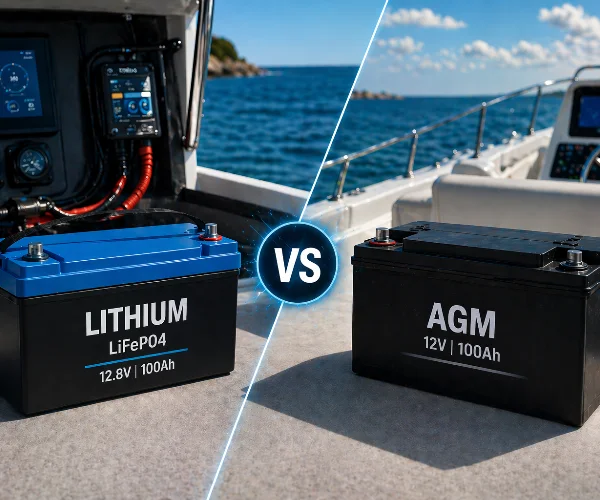
More usable power, faster charging, and less weight all translate to a better experience onboard. But a lithium upgrade isn’t just swapping batteries—it’s a complete system change.
More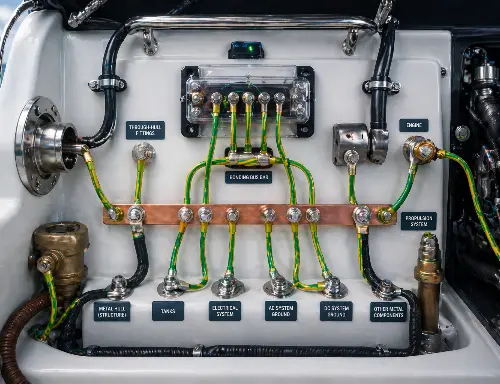
Ever wonder why your boat has a bunch of green wires running to things like the shaft, struts, and seacocks? That’s your bonding system—and while it may not be as flashy as your navigation gear or electronics, it plays a critical role in protecting your boat from corrosion, electrical faults, and even fire.
More
Our tailored servicing packages ensure your systems stay calibrated, protected, and ready when you are.
Contacts
Phone:
Email:
Address:
Social


..
Copyright © 2010-2025 Vanti Technology. All rights reserved.